Showing posts with label National Parks of India. Show all posts

Wednesday, November 4, 2015

Chandoli National Park


Chandoli National Park, established in the year 2004, is located in the junction of the three districts of the state of Maharashtra, namely, Sangli, Satara and Ratnagiri Districts.  This was earlier declared as a wildlife Sanctuary in the year 1985. The National Park is located near the Chandoli Dam in Maharashtra state.

Chandoli National Park lies between Koyna Wildlife Sanctuary and the Radhanagari Wildlife Sanctuary. The National park is the southern part of the Sahayadri Tiger Reserve. Chandoli National Park spreads along the crest of the Sahyadri Range of the northern Western Ghats. The Park forms and protects many perennial water channels, water holes and the Vasant Sagar Reservoir in Maharashtra. You can find a mix of Malabar Coast moist forests and North Western Ghats moist deciduous forests in the Park area.

Flora and Fauna found in Chandoli National Park
Anjani ironwood tree, jamun, pisa (angustifolia), fig, Olea (diocia), katak spinous kino tree, nana or Crape myrtle (lanceolata), kinjal, kokum tree and phanasi false kelat (brachiata) are some of the trees found in the evergreen forests.  Indian laurel, amla or Indian gooseberry, umbar or devil fig (hispida) and harra or chebulic myrobalan are some of the other species found in the National Park.

There are about  23 species of mammals, 122 species of birds, 20 species of amphibians and reptiles are known to be there in the forests of Chandoli.
Bengal Tigers, Indian leopards, Indian bison, leopard cats, sloth bears and Indian giant squirrels are  some of the animals found here.

Best time to visit the Chandoli National Park is October to February. June to September is the south west monsoon time  and a heavy rainfall over 3,500 mm (140 in)is recorded in the area.

Nearest Railway Stations

Sangli - 75 km
Miraj rail junction - 83 km
Kolhapur - 80 km
Karad - 47 km

Miraj junction is well connected to important cities in and around the state by express and super fast trains. You can get a connection train to Miraj junction or Sangli railway station. From there you can get a cab to Chandoli National Park.

Sunday, March 1, 2015

Pampadum Shola Wildlife Sanctuary


Pampadum Shola Wildlife Sanctuary is located at about 35 kilometers from well known  tourist destination in Kerala, Munnar in the Idukki district.  This is the smallest National Park, declared in the year 2003 and is placed in the south western part of the Western Ghats in Kerala. The National Park has an area of about 11.75 square kilometers only.

 Pampadum Shola Wildlife Sanctuary is one of the well known Eco Tourism destinations in Kerala. There are many endangered and rare species of birds and animals are protected here. Other than these endangered animals elephant, gaur, leopard, wild boar, sambar and common langur are found here.

Trekkings on Nature trails are arranged here for the tourists. Log cabins are available for accommodations in Kuttikadu and Neduvarpu.

How to reach Pampadum Shola Wildlife Sanctuary?
Cochin international airport at Nedumbassery is the nearest airport and is about 170 kilometers away.
Kochi city is at about 135kilometers,
Kottayam is at 148 kilometers.
Udumalpet in the state of Tamil Nadu is the nearest city located at about 110 kilometers.
Kochi Kodaikanal Highway passes through Pampadum Shola Wildlife Sanctuary.

For more details contact
The wildlife Warden
Munnar PO Idukki
Kerala - 685612
Tel : 04865231587
Mob : 0 9447979093
EMail : ww-munnar@forest.kerala.gov.in

Assistant Wildlife Warden
Shola National Parks Range
Top Station, Ellapetty PO
Vattavada, Idukki, Kerala - 685615

Friday, February 27, 2015

Sasan Gir National Park / wildlife Sanctuary

Sasan Gir National Park, spread around an area of 1412 square kilometers, is located in the state of Gujarat in India. The Sanctuary is surrounded by 7 perennial rivers and 4 dams which have become the lifeline for the people and the fauna of that region.

The forests and grasslands of Gir are known to be the last stronghold of Asiatic Lions. You can as well find a lot of varieties of flora and fauna in the area. Nawab of the Princely state of Junagarh used to use these forests as his hunting grounds. Because of the royal family's hunting the number of Asiatic lions in the forests were reduced to 15 by the time India got its independence.Now that the care has been taken, the numbers have vastly improved.

Other than the Asiatic lions you can find various other species of flora and fauna. There are 400 species of plants, 38 animal species, 300 species of birds, 37 reptilian species and around 2,000 species of insects found in the area .

Best time to visit Sasan Gir National Park
Except for the monsoon time any other time of the year  is good to visit the Sanctuary. The Sanctuary will  be closed during monsoon time because it is the breeding time of the animals and during summer the movement of the animals will be less due to the heat.  October to February will be the best time to visit the National Park as the animals will be active and moving around.

How to reach Sasan Gir National Park?
Keshod is the nearest domestic airport and can be easily connected to Rajkot and Ahmedabad airports. Ahmedabad is an international airport which is connected to various other airports in India and abroad.

Sasan Gir and Veraval are two railway stations nearby and can easily get connected to other neighbourhood stations in Gujarat.

Buses are available regularly from Junagarh and Veraval. Other private vehicles are also available for the trip to Sasan Gir National Park.

Tuesday, February 3, 2015

Bandhavgarh National Park


Bandhavgarh National Park is located in Umaria district, on the eastern parts of the state of Madhya Pradesh. The park has an area of 450 sq kilometers and is known for its breathtaking splendour of flora and fauna.

250 species of birds and 22 different species of mammals. Even though the park is considered as the real home of white tigers, the park provides shelter to various other Indian wildlife species namely, Bison, Cheetals, Langours and Sambars.

Principal Fauna found in Bandhavgarh National Park
Tiger, Panther, Spotted Deer, Sambhar, Blue bull, Wild Boar and others. Besides these animals, different types of birds can also be seen here.

Principal Flora found in Bandhavgarh National Park
Sal, Saja,Tendu, Aonla Dhawda, Jamun, Salai, Garari, Bamboo etc. This is the park of beautiful woods.

You can drive your  own petrol four wheeler vehicle or four wheel drive Diesel vehicle which is not older than five years inside the Sanctuary.

Activities inside the Bandhavgarh National Park
Vechicle Safaries,Elephant rides,Sher Darshan Wildlife watching from hides, (Trekking &Camping to be available shortly)

The spring seaso from January to March is the best time to visit and explore the Bandhavgarh National Park.

How to reach Bandhavgarh
Jabalpur is the nearest domestic airport to go to Bandhavgarh National Park. From Delhi you can get connection flights to Jabalpur and then take a cab to Umaria from Jabalpur.

Accommodation Facilities in the Bandhavgarh National Park
Bandhavgarh Meadows
Village – Bijaria, Tala, Bandhavgarh
Distt. – Umaria, Madhya Pradesh,
India 484661

Forest Rest House Tala
Field Director Bandhavgarh Tiger Reserve ,
Umaria
phone: (07653)222214

Mahua Kothi ( High end Resort )
Land Survey 26, Umaria,
Madhya Pradesh 484661
Phone:1800 11 1825

Syna Tiger Resort
Tala (Bandhavgarh),
Manpur, Umaria
Madhya Pradesh-484661
Phone : +91 9165510653/54/55/56/57/58/59/60/51
Email : bandhavgarh@synatigerresort.com

Saturday, January 31, 2015

Keibul Lamjao National Park, Manipur


About Keibul Lamjao National Park in Manipur
Keibul Lamjao National Park is located at about 48 kilometers away from Imphal, in the Bishnupur district of Manipur state in north eastern India. The National Park is about 40 square kilometers in area and is the only floating park in the whole world. The Keibul Lamjao National Park forms an integral part of Loktak Lake of Manipur. The greenery of the area and the moderate climate in the Park makes it a pleasant surprise and an interesting option for a family vacation.

Loktak Lake is a fresh water lake, also called as the floating lake because of the floating decomposed plant materials called phumdis in the local language. As this National Park is the natural refuge of the endangered Manipur Eld's Deer / Brow antlered Deer and Sangai also known as the Dancing Deer, this was declared as a Sanctuary in the year 1966. Later the Sanctuary got declared as the National Park in 1977.

The National Park is a swamp which was established by Mann Sharma with floating mass of vegetation. More than two thirds of the park area is formed by Phumdis . There is a water way which passes through the park gives you access through out the year . Boats plying through the lake to the Pabot Hill in the north of the Keibul Lamjao National Park. The swamp which forms the National Park contains three hills namely Pabot, Toya and Chingjao. During monsoon season these hills give refuge to the large mammals.

Apart from the Brow antlered deer there are many other species which are found here some of them are , Hog Deer, Wild boar, Jungle cat, Fox, Bamboo Rat, flying fox, Sambar Musk shrew etc. You can also find amphibians and reptiles like Viper, Krait, Cobra, Asian Rat snake, python,Tortoise and many more. You can also find bird species in this park like Kingfisher, Hill Mynah, North Indian Black Drongos, Indian White-breasted Water hen and Crimson-breasted pied wood pecker and many more.

How to reach Keibul Lamjao National Park?
Imphal, the capital city of Manipur, is the nearest airport. The airport is connected with New Delhi, Kolkata and Guwahati. These three airports are connected with almost all the cities in India. The Imphal airport is placed at the heart of the city and you can easily get cabs to reach the National Park.

Nagaland and Manipur State transport buses operate from the towns of Aizwal, Dimapur, Itanagar, Kohima, Shillong and Agartala to the National Park. These buses ply every day and the tariff per seat is Rs 75 to Rs 250. The travel in a bus from Dimapur to Imphal requires approximately 8 hours.

Imphal does not have a railway station. The nearest one to Manipur is at Dimapur which is located at about 215 kilometers and will take about 8 hours of bus journey to reach Imphal. Guwahati , is the next railway station and is located at about 414 kilometers from Imphal.
Trains to Guwahati are available from various parts of India namely, Kanyakumari , Thiruvananthapuram, Bangalore, Hyderabad, Chennai, New Delhi etc.

Friday, January 30, 2015

Namdapha Wildlife Sanctuary, Arunachal Pradesh


About Namdapha Wildlife Sanctuary
Namdapha Wildlife Sanctuary has been declared Namdapha National Park and Tiger Reserve in the year 1983 by the Government of India. This Sanctuary has a nature of true wilderness and a captivating beauty with lush green vegetation as well as impenetrable pristine and virgin forests. The National park covers an area of 1985 square kilometers and has various varieties of flora and fauna. This National Park and a Tiger Reserve lies at the international border between India and Myanmar, but within the Changlang District of Arunachal Pradesh, one of the seven states in the northeastern parts of India.
Namdapha National Park has the richest diversity maybe in the whole of Indian sub continent since it has the great altitudinal variations one could find that is from 4500 meters at Daphabum which is the highest to the 200 meters in the lowest of valleys.

Noa Dehing, Deban and the Namdapha are the rivers flowing in the area and you can see tropical rainforests in the valleys, with huge Hollock, Hollong and Mekal trees along with giant creepers namely, tall and dense Cane and Bamboo. There are deciduous forests and alpine forests in the higher regions which shows tht Namdapha is a botanical haven.

There are more than 150 tree species, flowers and orchids in the National Park. Blue vanda one of the rarest of Orchid species can be seen here

Tourist attractions in and around Namdapha Firm base, located at about 25 kilometers from the Deban Forest Lodge, on the Noa Dehing river, is a popular camping site. The base camp is nestled amidst beautiful and spectacular natures splendours. The track leads to an idyllic spot whih is surrounded by dense and luxurious forests. You can see birds of various species as well as some of the wild animals on the way to the camp. All the necessary equipments and guides are provided by the forest department for camping in the area.

Deban is a beautiful forest camp which is located on the bank of the river Noa Dehing and is placed within the boundary of the Namdapha National park. The place is ideal for trekking, hiking and angling on the river Noa Dehing. The forest bungalow is surrounded by evergreen forest is a place worth staying. It will be n experience you will find memorable.

Hornbill located at about9 kilometers from Deban is the homing ground for the hornbills . You can see lots and lots of these birds flying from one place to the other.

Camera Point is a camping site which offers you a vantage point for taking photographs of the wonderful and breathtaking views of the Namdapha landscape.

Gandhigram, located at about 120 kilometers from Deban, is placed on the southeast periphery of the National Park Namdapha. This is the last village in India which is wedged between China and Myanmar. This is also the home of the Lisu / Yobin tribe. Those who are interested in trekkng can try out a week long trek through these lush and dense jungles.

How to reach Namdapha National Park?
Dibrugarh is the nearest airport and Tinsukia is the nearest Railway station. Buses ply from from Dibrugarh to Miao regularly via Tinsukia, Margherita, Ledo, Jagun and Kharsang. Miao is an attractive little township on the banks of the river Dehing in the Changlang district of the state of Arunachal Pradesh. Miao town is the entry point for the Namdapha National Park, which is about 160 kilometers from Dibrugarh.

By Air
Nearest Airport is located at Mohanbari in Dibrugarh of the state of Assam which is about 182 kilometers from The Forest Rest House in Deban, within the Namdapha National Park area.

By Rail
The nearest main Railway station is Tinsukia, in the state of Assam, 141 kilometers from Forest Rest House, Deban, which is located within the Namdapha National Park area and the nearest Passenger Railway station is Margherita Railway Station in Assam at about 91 kilometers from Forest Rest House, Deban.

By Road
You can find good and motorable road connecting other towns and cities with the town Miao, which is entry point of the Namdapha National Park. The Forest Rest House, Deban is located within the Namdapha National Park area and is about 186 kilometers away from Dibrugarh, 141 kilometers away from Tinsukia, 91 kilometers from Margherita and 136 kilometers from the district headquarter Changlang.

The best way to reach Miao and then to Deban will be by Jeeps and Gypsies as it would be better to have your own vehicle to go to Namdapha. Taxis and other private cabs might prove very costly for the trip.

The best time to visit Namdapha National Park and the Tiger Reserve will be October to April that is after the North east monsoon season.

Languages spoken and understood in the surrounding areas are Tangsa, Singpho, Assamese, Hindi and English.

Indravati National Park, Chhattisgarh


About Indravati National Park
Indravathi National is the one and only Tiger Reserve and is located in the Dantewada district of Chhattisgarh, in India. The park gets its name Indravathi from the river Indravathi which flows flowing from east to west forms the northern boundary of the park with the state of Maharashtra .

The area of the park is approximately 2800 square kilometers. The Indravathi park was declared a National park in 1981 and a Tiger Reserve in 1983. After the park was declared as a tiger reserve under the Project Tiger of India , it became one of the most famous tiger reserves of India

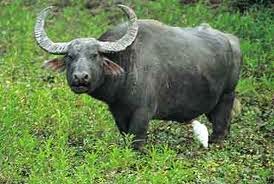
The altitude of the Park is from 177 to 599 m above the sea level and it has become famous for its unique and diverse wildlife and bird species including some of the most endangered species such as Wild Buffalos and Hill Mynas.

Beautiful hill ranges with lush green vegetation and unique and varied wildlife makes the park " a must see " for a tourist and a wild life enthusiast.

Flora and fauna of the National Park
The major wildlife in Indravati National Park include the endangered Wild Buffalos, Barasinghas, Tigers, Leopards, Gaurs (Indian Bison), Nilgai, Sambar, Chausingha (four-horned Antelope), Sloth Bear, Dhole (Wild Dog), Striped Hyena, Muntjac, Wild Boar, Flying Squirrel, Porcupine, Pangolins, Monkeys and Langurs among many others. The commonly found reptiles in the park are Freshwater Crocodile, Monitor Lizard, Indian Chameleon, Common Krait, Indian Rock Python, Cobra and Russell's Viper to name a few. The Park also gives shelter to the large variety of birds of which Hill Maina is the most important species here.

How to Reach the Park?
By Air: Raipur is the nearest Airport which is 486 kilometers away and the railway station is Jagdalpur which is 168 kilometers away.The Village Kutrue is the entry point to the Indravathi national park and the link road is situated at a distance of 146 kms kilometers from jagdalpur on the jagdalpur - Bhopalpattinam Road. From the Village Kutrue it is still 22- 23 kilomters to reach the park. It would be betterif you can hire a car from the railway station at Jagdalpur.

By rail: The nearest railway station will be Jagdalpur which is the district headquarters.

The nearest bus stand for Indravati National Park is Bijapur and the town is well connected from different parts of the state.

Best time to visit the National Park:
You can visit the park at any time of the year, but would be better to avoid the rainy days of the North east Monsoon and southwest monsoons. As such December to June will be the best time to visit the place.

Monday, January 26, 2015

Kaziranga National Park in Assam


Kaziranga National Park and Manas National Park are the well known wildlife Sanctuaries in the state of Assam in India. Both of these national parks have  been declared as World Heritage sites.

Kaziranga National Park is located in the foothills of the Great Himalayas near the India Bhutan border, in the Western Assam. The Park has been divided in to five ranges,
Central with the entry point at Kohora
Western with the entry point at Bagori
Eastern with the entry point at Agratoli
Western most with the entry point at Bada Pahad
These four ranges lie to the south of the river Brahmaputra and the fifth one is Northern range lies on the northern bank of the river. 

The National Park is home to about 180 species of mammals, one horned rhinoceros, Golden Langur, Hoolock Gibbon, Royal Bengal Tiger some among them. The Park also boasts of a spectacular range of avifauna.
The two largest python of the world reticulated and the rock pythons are found here along with the King Cobra. Observing the wildlife and the birding are the important activities in the Kaziranga National Park.


How to reach : 
Rowraiah (Jorhat) is the nearest Airport which is 97 Kms. away and LGBI Airport (Guwahati) is 239 Kms. away. 
The road distances from nearest cities & towns to Kohora are : 
from Jorhat is 89 Kms., 
from Nagaon is 96 Kms., 
from Guwahati is 219 Kms., 
from Golaghat is 73 Kms.
from Bokakhat is 21 Kms.


Contact Person:  
Director, Kaziranga National Park
+91 3776-268095 / +91 3776-268086

Informations about the  tour packages, accommodation facilities and bookings, airport transfers and taxi services  can be had at the helpline number +91-9401001212.
Authorized guides, Mahout guided elephant rides, jeep or other vehicles can be arranged in advance.

Best season to visit: 
November to April.
The Park remains closed during the monsoon that is from mid April tomid October.

Accommodation facilities at the Kaziranga National Park
Department of Environment and Forests of the Assam Government maintain 4 tourist lodges at Kohora and 3 tourist lodges inside the national park.
For other accommodation facilities visit the following pages.

Accommodation facilities in and around Kaziranga National Park
Diphlu River Lodge
Landmark woods
Iora Retreat, luxury resort

For more details visit Kaziranga National Park 

Entrance Details 
Timings - 5.30 am to 6.30 pm
Entry Fee 
Indian Nationals -  Rs. 20
Foreigners - Rs 250 /
For Vehicle Entry - Rs 300

Camera fee for Still Cameras - Rs 50 for Indians and Rs 500 for foreigners
Video Cameras Rs 100 for Indians and Rs 500 for foreigners.

Friday, January 23, 2015

Wildlife National Parks in India


Wildlife National Parks in India
1. Anshi National Park Karnataka
2. Balphakram National Park Meghalaya
3. Bandhavgarh National Park Madhya Pradesh
4. Bandipur National Park Karnataka
5. Bannerghatta National Park Karnataka
6. Vansda National Park Gujarat
7. Betla National Park Jharkhand
8. Bhitarkanika National Park Orissa
9. Blackbuck National Park, Velavadar Gujarat
10. Buxa Tiger Reserve West Bengal
11. Campbell Bay National Park Andaman and Nicobar
12. Chandoli National Park Maharashtra
13. Corbett National Park Uttarakhand
14. Dachigam National Park Jammu and Kashmir
15. Darrah National Park Rajasthan
16. Desert National Park Rajasthan
17. Dibru-Saikhowa National Park Assam
18. Dudhwa National Park Uttar Pradesh
19. Eravikulam National Park Kerala
20. Fossil National Park Madhya Pradesh
21. Galathea National Park Andaman and Nicobar
22. Gangotri National Park Uttarakhand
23. Gir National Park Gujarat
24. Gorumara National Park West Bengal
25. Govind Pashu Vihar Uttarakhand
26. Great Himalayan National Park Himachal Pradesh
27. Gugamal National Park Maharashtra
28. Guindy National Park Tamil Nadu
29. Gulf of Kachchh Marine National Park Gujarat
30. Gulf of Mannar Marine National Park Tamil Nadu
31. Hemis National Park Jammu and Kashmir
32. Harike Wetland Punjab
33. Hazaribag National Park Jharkhand
34. Indira Gandhi National Park (prev: Annamalai National Park) Tamil Nadu
35. Indravati National Park Chhattisgarh
36. Ntangki National Park Nagaland
37. Kalesar National Park Haryana
38. Kanha National Park Madhya Pradesh
39. Kanger Ghati National Park (Kanger Valley) Chhattisgarh
40. Kasu Brahmananda Reddy National Park Andhra Pradesh
41. Kaziranga National Park Assam
42. Keibul Lamjao National Park Manipur
43. Keoladeo National Park Rajasthan
44. Khangchendzonga National Park Sikkim
45. Kishtwar National Park Jammu and Kashmir
46. Kudremukh National Park Karnataka
47. Madhav National Park Madhya Pradesh
48. Mahatma Gandhi Marine National Park (prev: Wandur National Park) Andaman and Nicobar
49. Mahavir Harina Vanasthali National Park Andhra Pradesh
50. Manas National Park Assam
51. Mathikettan Shola National Park,  Kerala
52. Middle Button Island National Park, Andaman and Nicobar
53. Mollem National Park ,  Goa
54. Mouling National Park Arunachal Pradesh
55. Mount Abu Wildlife Sanctuary Rajasthan
56. Mount Harriet National Park Andaman and Nicobar
57. Mrugavani National Park Andhra Pradesh
58. Mudumalai National Park Tamil Nadu
59. Mukurthi National Park Tamil Nadu
60. Murlen National Park Mizoram
61. Namdapha National Park Arunachal Pradesh
62. Nameri National Park Assam
63. Nanda Devi National Park Uttarakhand
64. Nandankanan National Park Orissa
65. Navegaon National Park Maharashtra
66. Neora Valley National Park West Bengal
67. Nokrek National Park Meghalaya
68. North Button Island National Park Andaman and Nicobar
69. Orang National Park Assam
70. Palani Hills National Park Tamil Nadu
71. Panna National Park Madhya Pradesh
72. Pench National Park, Madhya Pradesh Madhya Pradesh
73. Pench National Park Maharashtra
74. Periyar National Park, Kerala
75. Phawngpui Blue Mountain National Park, Mizoram
76. Pin Valley National Park, Himachal Pradesh
77. Rajaji National Park, Uttarakhand
78. Rajiv Gandhi National Park (prev: Nagarhole National Park) Karnataka
79. Rani Jhansi Marine National Park Andaman and Nicobar
80. Ranthambore National Park Rajasthan
81. Saddle Peak National Park Andaman and Nicobar
82. Salim Ali National Park Jammu and Kashmir
83. Sanjay National Park² Chhattisgarh
84. Sanjay National Park² Madhya Pradesh
85. Sanjay Gandhi National Park a.k.a. Borivili National Park,
86. Sariska National Park Rajasthan 1982
87. Satpura National Park, Madhya Pradesh
88. Silent Valley National Park, Kerala
89. Sirohi National Park, Manipur
90. Simlipal National Park Orissa
91. Singalila National Park West Bengal
92. South Button Island National Park Andaman and Nicobar
93. Sri Venkateswara National Park Andhra Pradesh
94. Sultanpur National Park Haryana
95. Sundarbans National Park West Bengal
96. Tadoba National Park Maharashtra
97. Valley of Flowers National Park,  Uttarakhand
98. Valmiki National Park,  Bihar 1
99. Kanwar Lake Bird Sanctuary Bihar
100. Vikramshila Gangetic Dolphin Sanctuary Bihar
101. Van Vihar National Park Madhya Pradesh
102. Dimna National Park